




Predictive Maintenance for HVAC: From Reactive Repairs to Real-Time Intelligence
The Real Cost of Waiting for Something to Break
A six-hour chiller failure in a 180,000-square-foot office building costs far more than the repair invoice. Factor in lost productivity across hundreds of employees, tenant complaints, emergency contractor premiums at 1.5–2x standard labor rates, and the lease renewal risk that follows — and a single afternoon of HVAC downtime can expose a building owner to more than $400,000 in total financial impact. The repair bill itself? Often less than 4% of that figure.
This is the hidden tax of reactive maintenance: the repair cost is visible, but the true cost is buried in productivity loss, tenant attrition, regulatory exposure, and reputational damage. For facility managers and building owners responsible for commercial portfolios, the math is unambiguous. Reactive maintenance isn't a cost-saving strategy — it's a deferred liability.
The question is no longer whether to move away from reactive repairs. It's how quickly you can deploy the intelligence to make that shift. HVAC predictive maintenance — powered by IoT sensor networks and cloud-based AI — is making that transition faster, more affordable, and more measurable than ever before.
The Maintenance Strategy Gap: What the Numbers Actually Show
Most commercial buildings still operate in a reactive or at-best calendar-based preventive maintenance mode. According to McKinsey research, only 51% of maintenance activities across facilities are preventive — leaving nearly half as unplanned, reactive work.
The financial difference between strategies is substantial and well-documented:
| Strategy | Annual Cost (% of Replacement Asset Value) | Key Characteristic |
| Reactive | 4-6% of RAV | Highest cost; unpredictable failures |
| Preventive | 2.5-4% of RAV | Scheduled, but over-maintains some assets |
| Predictive | 1.5-2.5% of RAV | Condition-based; lowest total cost |
On a $10 million asset base, the gap between reactive and predictive approaches represents $150,000–$350,000 per year in avoidable spending.
The U.S. Department of Energy estimates that predictive maintenance programs save 8–12% over preventive approaches and up to 30–40% compared to reactive strategies. McKinsey data puts the ROI range at 10:1 to 30:1 within 12–18 months for high-criticality assets, with 95% of adopters reporting positive returns. For commercial HVAC systems — where equipment replacement costs routinely exceed $50,000 and downtime cascades across every occupant in the building — these assets are exactly the type that justify predictive investment.
The most commonly cited HVAC failure causes are entirely predictable and preventable with continuous monitoring: dirty filters restricting airflow (responsible for approximately 22% of failures), low refrigerant charge causing compressor overheating (18%), fouled condenser or evaporator coils (17%), worn fan belts and bearings (14%), and failing capacitors and contactors in compressor circuits (11%). Each costs $60–$900 to address in a planned maintenance window. Each costs $3,000–$47,000 when it fails without prior detection.
Why Traditional Maintenance Schedules Miss the Mark
Calendar-based preventive maintenance was a significant improvement over pure run-to-failure approaches, but it has a structural flaw: it services equipment on a fixed schedule regardless of actual condition. This means healthy units get serviced unnecessarily — consuming labor budget without delivering value — while degrading units continue operating between visits with nobody aware of the developing problem.
ASHRAE, the American Society of Heating, Refrigerating and Air-Conditioning Engineers, has documented through fault detection and diagnostics (FDD) research that commercial HVAC systems waste roughly 30% of their energy due to undetected faults, not because equipment is old or undersized, but because malfunctions go unnoticed for months. The most energy-wasting faults — simultaneous heating and cooling, stuck economizer dampers, miscalibrated sensors driving incorrect setpoints — are invisible to scheduled inspections conducted on monthly or quarterly cycles.
Buildings operating under ASHRAE Guideline 36 high-performance sequences are especially well-positioned for predictive maintenance. The same continuous data loops that enable GL36 compliance — real-time zone-level sensing, dynamic setpoint adjustment, and fault detection — are precisely the data streams that predictive analytics platforms use to catch equipment degradation before it becomes a failure event. GL36 and predictive maintenance aren't separate initiatives; they share the same infrastructure.
The gap between "running" and "running efficiently" is exactly where the financial damage accumulates. And it's only closed by continuous monitoring.
How IoT Sensors Enable Continuous HVAC Intelligence
The foundation of any HVAC predictive maintenance program is real-time data. IoT sensors placed on critical HVAC components — compressors, air handling units, fan motors, cooling towers, variable air volume boxes — measure the physical signals that precede failure: temperature, pressure, vibration, electrical current draw, humidity, and airflow.
Each sensor type targets a specific failure mode:
Vibration sensors detect bearing wear in fan motors and compressors — flagging abnormal patterns weeks before mechanical failure
Current/amperage sensors identify motors working harder than normal, pointing to blocked airflow, worn components, or low refrigerant
Temperature sensors monitor supply and return air delta-T, refrigerant line temperatures, and discharge conditions to catch coil freeze, inefficient heat exchange, or improper superheat
Pressure sensors detect refrigerant leaks long before they cause compressor damage
CO₂ and humidity sensors assess indoor air quality and ventilation effectiveness continuously
When these data streams flow into a cloud-based AI platform, machine learning algorithms establish performance baselines for each piece of equipment and continuously compare real-time readings against those baselines. Seasonal variation is distinguished from component degradation. Alerts fire only when data indicates an actionable issue — not every time a reading fluctuates — eliminating the alert fatigue that plagues manual monitoring approaches.
Research cited in the ASHRAE Journal found that continuous IoT HVAC monitoring reduces unplanned downtime events by up to 85% in monitored portfolios. Industry benchmarks show that 72% of all HVAC failures could be predicted and prevented with this type of continuous monitoring in place.
The business case compounds: facilities with IoT sensor monitoring report 85% fewer comfort complaints from occupants, 75% lower emergency callout costs, and equipment lifespan extended by 30–40% beyond calendar-maintained systems. A 100,000-square-foot commercial building typically saves $25,000–$60,000 annually from combined energy optimization and emergency repair elimination.
The Building Automation Market Is Being Rebuilt Around Predictive Analytics
The shift from reactive to predictive maintenance isn't an emerging trend — it's a market transformation already underway. The global building automation system (BAS) market was valued at approximately $92 billion in 2024 and is projected to reach $191 billion by 2030, growing at a CAGR of 13.4%, according to MarketsandMarkets. The fastest-growing segment within that market is building energy management software, driven directly by AI-powered fault detection, predictive analytics, and remote monitoring capabilities.
The U.S. market alone is expected to grow from $22.4 billion in 2025 to $45.4 billion by 2034. The drivers are consistent across every major report: IoT integration, AI-powered analytics, cloud platforms enabling remote monitoring, and mounting pressure on facility teams to demonstrate energy efficiency and sustainability outcomes.
Facility managers who are evaluating building automation platforms today are choosing systems specifically on their predictive maintenance capabilities — not just their ability to control setpoints. The evaluation criterion has shifted from "does it control the HVAC?" to "does it tell me what's about to fail, and when?"
What Predictive Maintenance Catches — Before It's Too Late
See How 75F Detects HVAC Issues Before They Become Emergencies → Explore the 75F Platform
The practical value of HVAC predictive maintenance lies in the specific failure modes it catches early. These are not theoretical — they are the failures that facility teams encounter every maintenance cycle in every commercial building:
Compressor degradation: Gradual loss of compression efficiency raises current draw 8–15% before any temperature complaints reach the front desk. AI analysis of amperage drift patterns can flag developing compressor issues 45–60 days before mechanical failure — enough lead time to schedule repair during a planned maintenance window rather than an emergency weekend callout.
Refrigerant leaks: Pressure sensor data detects early-stage refrigerant loss long before cooling capacity degrades to the point where occupants notice. Catching a refrigerant leak at 5% loss versus 25% loss is the difference between a $200 service call and a compressor replacement.
Bearing wear in fan motors: Vibration sensors identify abnormal patterns in fan motor bearings weeks before failure. A seized fan motor on an air handling unit serving multiple zones creates immediate comfort issues and, in data centers or healthcare facilities, can create compliance or safety problems within minutes.
Fouled coils and heat exchangers: A coil with 10% fouling increases energy consumption by up to 15% and reduces cooling capacity. IoT temperature monitoring detects the performance degradation as it develops rather than at the next scheduled inspection — which may be months away.
Economizer faults: Stuck or failed economizer dampers are among the most energy-wasting faults in commercial HVAC systems, contributing an estimated 5–7% to overall energy waste. They are also nearly invisible to maintenance teams without continuous airflow and temperature monitoring across the economizer cycle.
VAV box actuator failures: A failed VAV damper stuck in the maximum cooling position drives zone overcooling, increases system energy load, and generates immediate occupant complaints — all while the BAS shows the system running normally. Continuous monitoring flags the deviation from expected damper-to-setpoint response.
75F: Predictive Intelligence Built Into Every Layer of the Platform
75F's building automation platform is purpose-built for the kind of continuous, data-dense monitoring that makes predictive maintenance possible at scale. Unlike bolt-on monitoring solutions that sit alongside existing controls, 75F delivers a full-stack approach: sensors, controls, and analytics in a single integrated platform — with the data density needed to move from reactive repairs to real-time intelligence.
The HyperStat sensor network forms the data foundation. 75F's HyperStat measures and continuously streams temperature, humidity, CO₂, VOC levels, occupancy, lux, and sound — replacing legacy thermostats while adding a depth of environmental and occupancy data that traditional BAS systems never capture. Each HyperStat connects to the 75F IoT platform for real-time remote monitoring and control.
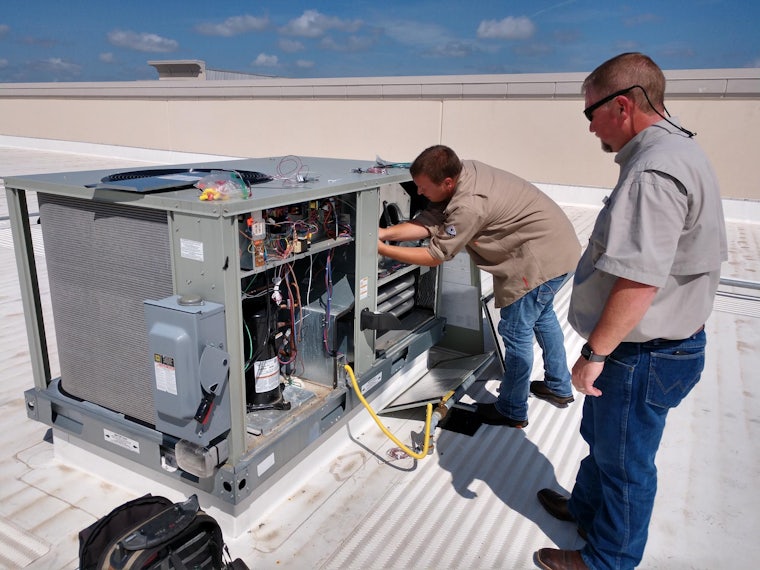
For systems that need simple, effective control — rooftop units, heat pumps, fan coils, and other two-wire applications — the HyperStat Split makes retrofitting straightforward. Replace the existing two wires from the old thermostat, mount the HyperStat Split on the wall, place 75F's companion device on the RTU, and you immediately have advanced RTU control with full cloud connectivity, real-time monitoring, and the same continuous data streaming into Facilisight as every other device in the platform. No new wiring runs, no complex commissioning — just a simple retrofit that brings legacy equipment into the predictive intelligence loop.
At the zone level, the Smart Node connects to VAV boxes and reports damper position, airflow, and equipment status in real time. This granular zone-level data is what gives 75F's predictive analytics layer the resolution it needs to distinguish a stuck VAV actuator from a setpoint drift — catching the kind of silent failures that calendar-based maintenance schedules never see between visits.
The Connect Module serves as the on-site IoT gateway, aggregating sensor data from every HyperStat, HyperStat Split, and Smart Node in the building and pushing it continuously to the cloud for real-time analytics and remote access. This architecture means a facility manager in a corporate office can monitor equipment health across an entire portfolio of buildings — from a phone, tablet, or desktop — without being on-site for any of it.
Facilisight, 75F's cloud-based monitoring portal, delivers over 650 data points synced to the cloud every minute per building. Facility managers can access real-time equipment health, zone-level performance, and active alerts from any device with internet access — phone, tablet, or desktop. The platform's heat maps provide instant visual insight into thermal loads across every zone, while alert configurations ensure the right team members are notified the moment an anomaly is detected, before occupants notice anything is wrong.
AI-powered analytics continuously analyze the incoming data stream, distinguishing seasonal variation from equipment degradation, and generating prioritized alerts that direct technicians to specific equipment with specific issues — not broad zones that require manual investigation. This means maintenance teams spend their time fixing diagnosed problems, not hunting for them.
The Apple Valley Commons case study demonstrates this value in practice. Before 75F, the building owner had maintenance workers troubleshooting temperature and equipment issues three times per week. After installation, the 75F system identified an exhaust fan that had not been working for years — contributing to chronic overheating in an elevator equipment room that was regularly reaching 130–140°F and causing elevator shutdowns. With 75F providing continuous monitoring and remote visibility, the building achieved 28% total energy savings and eliminated the reactive maintenance cycle entirely.
Across coworking portfolios like WeWork, 75F's continuous monitoring has enabled facility teams to manage energy performance and equipment health across multiple locations from a centralized Facilisight dashboard — replacing reactive site visits with remote-first operations and delivering the kind of portfolio-wide visibility that enterprise real estate teams increasingly require as a baseline standard.
For enterprise deployments, 75F's platform is SOC 2 compliant, meeting the security and data handling standards required for corporate real estate portfolios and regulated industries.
Explore 75F's customer case studies to see measurable outcomes across commercial, hospitality, healthcare, and coworking building types.
Making the Transition: From Reactive to Predictive
The shift from reactive to predictive maintenance is not a single technology decision — it's an operational transformation. The organizations achieving the strongest ROI treat it as a data strategy, not just a sensor deployment.
The practical path forward:
Baseline current costs — quantify your last 12–24 months of emergency repair spend, overtime labor, and equipment downtime events. This becomes your ROI baseline.
Identify critical assets — focus first on equipment where failure cost exceeds $10,000 per event: chillers, primary AHUs, cooling towers, and compressor banks.
Deploy continuous monitoring — integrate IoT sensors that deliver real-time data streams across temperature, pressure, current, and vibration parameters on those critical assets.
Connect to AI analytics — ensure sensor data flows into a platform that can establish baselines, detect anomalies, and generate actionable alerts with diagnostic context. 75F's Easy Street auto-commissioning tool reduces the manual overhead of getting a building online — automatically validating device setup, creating punch lists, and eliminating the manual device discovery steps that typically consume the bulk of commissioning time. Maintenance teams start from a diagnosed baseline, not a blank slate.
Measure and iterate — track reduction in unplanned downtime events, emergency repair spend, and mean time to repair on a monthly basis.
Facilities that implement this sequence report payback periods of 8–18 months for well-instrumented deployments, with 3-year IRRs in the 45–85% range for programs targeting high-criticality assets, according to industry financial modeling.
The DOE estimates commercial building owners can reduce energy bills by 5–20% through proper operations and maintenance programs — and predictive maintenance is the highest-leverage component of any O&M strategy.
Conclusion: Intelligence Is the New Maintenance
The commercial buildings that will carry the lowest operating costs over the next decade aren't the ones with the newest equipment. They're the ones with the most intelligence about the equipment they have.
HVAC predictive maintenance — delivered through a continuous IoT sensor network, cloud-based AI analytics, and a remote monitoring platform that gives facility teams real-time visibility from any device — converts the unpredictable cost of equipment failure into the predictable, manageable cost of scheduled intervention.
The financial case is clear: predictive maintenance reduces total maintenance costs 18–40% below reactive approaches, cuts unplanned downtime by 30–50%, extends equipment lifespan by 15–40%, and delivers ROI that most programs achieve within 12–18 months.
The technology to get there exists now. The question is whether your buildings are capturing the data to act on it.
Ready to see real-time HVAC intelligence in action?
Schedule a Live Demo of 75F's Remote Monitoring Platform →
See how the Facilisight dashboard gives your facility team continuous visibility into equipment health, energy performance, and emerging faults — across every building in your portfolio, from any device, at any time.
Frequently Asked Questions: HVAC Predictive Maintenance
What is HVAC predictive maintenance?
HVAC predictive maintenance is a condition-based maintenance strategy that uses IoT sensors and AI analytics to continuously monitor equipment health and detect developing faults before they cause failures. Unlike calendar-based preventive maintenance, it services equipment only when data indicates an actual need — reducing unnecessary labor while eliminating unplanned downtime.
How much can predictive maintenance reduce HVAC maintenance costs?
The U.S. Department of Energy estimates predictive maintenance reduces total maintenance costs 30–40% compared to reactive strategies and 8–12% below preventive approaches. On a $10 million asset base, the gap between reactive and predictive maintenance represents $150,000–$350,000 in avoidable annual spending.
What sensors are used for HVAC predictive maintenance?
The most effective HVAC predictive maintenance programs use a combination of vibration sensors (detecting bearing wear in fan motors and compressors), current/amperage sensors (identifying motors working harder than normal), temperature sensors (monitoring supply/return air delta-T and refrigerant line conditions), pressure sensors (detecting early-stage refrigerant leaks), and CO₂ and humidity sensors (assessing ventilation effectiveness and indoor air quality). Platforms like 75F's HyperStat and Smart Node deliver these data streams continuously across every zone in a commercial building.
How long does predictive maintenance take to pay for itself?
Facilities that implement continuous IoT monitoring and AI-powered analytics typically report payback periods of 8–18 months for well-instrumented deployments. McKinsey research puts the ROI range at 10:1 to 30:1 within 12–18 months for high-criticality assets, with 95% of adopters reporting positive returns.
What is the difference between predictive maintenance and preventive maintenance?
Preventive maintenance follows a fixed schedule regardless of equipment condition — it over-maintains healthy assets and misses developing faults between visits. Predictive maintenance is condition-based: sensors and AI analytics monitor equipment continuously and only trigger action when data indicates a real issue. Predictive approaches typically cost 1.5–2.5% of replacement asset value annually, versus 2.5–4% for preventive and 4–6% for reactive strategies.
Can predictive maintenance work in older commercial buildings?
Yes. Wireless IoT sensor platforms like 75F are specifically designed for retrofit applications — eliminating the need to run new communications cabling through occupied buildings. Wireless mesh networks enable sensors to be deployed across older commercial buildings without structural disruption, making predictive maintenance accessible to the vast majority of the existing commercial building stock, not just new construction.
What building types benefit most from HVAC predictive maintenance?
Any commercial building with significant HVAC assets benefits, but the ROI is strongest in buildings where HVAC downtime creates cascading costs: office buildings with dense occupancy, healthcare facilities with infection control requirements, coworking and multi-tenant spaces where tenant satisfaction drives lease renewals, and hospitality properties where guest comfort is directly tied to revenue. 75F has deployed predictive monitoring across commercial, healthcare, hospitality, and coworking building types.
Sources
U.S. Department of Energy, Office of Energy Efficiency & Renewable Energy — Operations & Maintenance Best Practices: https://www.energy.gov/eere/femp/operations-and-maintenance-best-practices
ASHRAE — Fault Detection and Diagnostics for HVAC Systems: https://www.ashrae.org/technical-resources/ashrae-journal
MarketsandMarkets — Building Automation System Market Report 2025–2030: https://www.marketsandmarkets.com/Market-Reports/building-automation-control-systems-market-408.html
McKinsey & Company — Predictive Maintenance in Industrial Operations (cited via Vista Projects and Oxmaint industry research): https://www.vistaprojects.com/predictive-maintenance-cost-savings-roi-guide/
WorkTrek — HVAC Maintenance Statistics: https://worktrek.com/blog/hvac-maintenance-statistics/
Oxmaint — Predictive vs. Preventive vs. Reactive Maintenance Cost Analysis: https://oxmaint.com/industries/facility-management/predictive-vs-preventive-vs-reactive-maintenance
75F — How the Cloud Facilitates Remote Monitoring & Support: https://www.75f.io/news/how-the-cloud-facilitates-remote-monitoring-support/
75F — Apple Valley Commons Case Study: https://www.75f.io/case-studies/apple-valley-commons/
5F — WeWork Case Study: https://www.75f.io/case-studies/wework/
Precedence Research — Building Automation Systems Market Size 2025–2034: https://www.precedenceresearch.com/building-automation-systems-market





Healthier Buildings Series: Real Estate Strategies in Times of Uncertainty
Commercial real estate is in a completely different landscape today than it was 12 months ago.

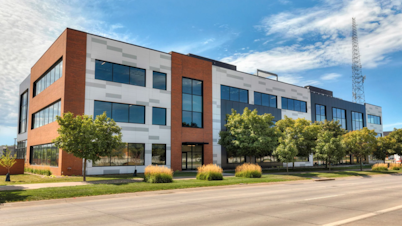
75F Makes IntelliPak RTU Integration Simple in High-End Office Space
Hubbell Realty installed 75F's IoT Building Management System with goals to set a flexible foundation for future building upgrades.