





What is ASHRAE Guideline 36 — and Why Should Your Building Exceed It?
What Is ASHRAE Guideline 36 — and Why Should Your Building Exceed It?
Every day, across millions of commercial buildings in the United States, HVAC systems run on control sequences that were written once, commissioned once, and then largely forgotten. Setpoints drift. Fans run at full speed when occupancy is low. Heating and cooling fight each other across zone boundaries. U.S. commercial buildings spend $141 billion on energy annually, and a significant share of that goes directly to waste.
ASHRAE Guideline 36 — formally titled High-Performance Sequences of Operation for HVAC Systems — was developed to fix this. It is the most rigorous, peer-reviewed framework for HVAC control logic ever published by the American Society of Heating, Refrigerating, and Air-Conditioning Engineers. Understanding what GL36 is, what it delivers, and why simply meeting it is not always enough is essential for any facility manager, building owner, or energy engineer evaluating their building automation strategy.
What Is ASHRAE Guideline 36?
ASHRAE Guideline 36 is a detailed, vendor-neutral specification for HVAC sequences of operation — the logic that governs how heating, cooling, ventilation, and airflow systems behave in response to occupancy, load, and environmental conditions.
First published in 2018, the guideline was updated in 2021 to add chilled water and hot water plant sequences, and again with 23 addenda incorporated into the 2024 edition, which introduced new modular humidity-limiting and dehumidification strategies for multizone VAV air handling units, outdoor air pollution modes, and enhanced control sequences.
Before GL36 existed, each building controls contractor essentially invented their own logic. The result was a fragmented industry where control quality varied enormously by project, by contractor, and often by geography — and where poorly programmed sequences silently consumed energy for years without detection.
What GL36 Standardizes
ASHRAE Guideline 36 provides pre-engineered, tested sequences for the most common commercial HVAC configurations, including:
Single-zone and multi-zone VAV air handling units with supply air temperature reset and duct static pressure reset
VAV terminal units with minimum airflow control and occupancy-based setback
Chilled water and hot water plants with demand-based supply temperature and pipe static pressure reset
Demand-controlled ventilation with CO₂-based logic compliant with ASHRAE Standard 62.1
Fault detection and diagnostics (FDD) integrated directly into the sequences for real-time system health monitoring
The guideline's "trim-and-respond" logic for static pressure reset is one of its most impactful innovations — rather than maintaining a fixed duct pressure setpoint, the system continuously reduces pressure until a zone signals it needs more airflow, then responds. This minimizes fan energy without sacrificing comfort.
The Energy Savings Case for ASHRAE GL36
The financial case for ASHRAE Guideline 36 is built on a substantial foundation of peer-reviewed research and real-world field demonstrations.
A foundational study from the Pacific Northwest National Laboratory (PNNL), commissioned by the U.S. Department of Energy, found that properly implemented building controls across 14 commercial building types could deliver average total energy savings of approximately 29% — equivalent to 4–5 quadrillion BTUs annually nationwide. The measures that drove the largest savings — VAV minimum airflow reduction, setpoint optimization, and occupancy-based scheduling — are precisely the sequences codified in GL36.
More recently, a 2024 PNNL study evaluated GL36-compliant supervisory setpoint reset strategies in a large office building emulator in Chicago. The findings showed energy savings of up to 41% in the heating season, 18% in shoulder seasons, and 20% in the cooling season compared to conventional controls — while maintaining thermal comfort. Critically, the study found that the combined effect of airside and plant-side GL36 sequences exceeded the sum of their individual contributions, confirming the synergistic nature of the guideline's design.
Field demonstrations reinforce these numbers. California trials — conducted with proper engineering oversight — demonstrated 11–35% whole-building electricity savings from GL36 control retrofits, according to field research published by Slipstream for the Minnesota Department of Commerce. The same research highlights a critical caveat: buildings that attempted GL36 implementation without sufficient engineering expertise and commissioning support failed to achieve meaningful savings — a warning that carries significant implications for how facility managers evaluate control system investments.
Where the Savings Come From
GL36's energy reductions stem from the compound effect of multiple optimizations operating simultaneously:
| GL36 Strategy |
Estimated Energy Impact |
| VAV Minimum airflow reduction | ~7% total site energy |
| Occupancy-based HVAC scheduling | ~6% total site energy |
| Supply air temperature reset | ~6-7% HVAC energy |
| Duct static pressure reset (trim-and-respond) | ~3-4% HVAC energy |
| Demand-controlled ventilation | Variable; significant in high-occupancy buildings |
| Heating/cooling plant temperature reset | Up to 41% heating season savings (PNNL 2024) |
These measures work in combination. When a zone enters standby mode, minimum airflow drops, static pressure resets downward, supply air temperature adjusts, and the plant responds to reduced demand — all without operator intervention.
Why Meeting GL36 Is Just the Beginning
Here is where facility managers often encounter a gap between expectation and reality.
ASHRAE Guideline 36 is, in its own language, a guideline — not a mandatory standard. California has incorporated GL36 requirements into its Title 24 energy code, accelerating adoption in that state, but nationwide adoption remains patchy. More importantly, even when GL36 is specified, implementation quality varies significantly.
The Minnesota field demonstration illustrates the risk clearly: buildings with aging mechanical systems, insufficient controls contractor training, or missing engineering oversight failed to implement the sequences correctly, and in some cases energy consumption actually increased. The California demonstrations — with proper engineering rigor — showed 11–35% electricity savings. Same guideline, dramatically different outcomes.
The Implementation Gap
This divergence points to a structural problem in traditional HVAC controls. GL36 requires a one-time expert implementation — once programmed, sequences are static. They do not adapt to changes in occupancy patterns, equipment aging, or seasonal behavior. Commissioning is episodic, and fault detection logic generates alerts but does not automatically correct problems.
The buildings that achieve the upper end of GL36's savings potential are those with expert commissioning and ongoing operational oversight — resources that most mid-market buildings simply do not have.
How 75F Delivers GL36-Level Performance — Automatically
This is the challenge that 75F was built to solve.
75F's IoT-based Building Management System comes pre-built with ASHRAE Guideline 36-compliant control sequences across its full stack — from the HyperStat and HypertStat Split at the zone, to the CCU, Facilisight interface, and Saffron AI for continuous, portfolio-wide optimization. Unlike traditional BAS implementations that require a controls engineer to program GL36 sequences from scratch — and then leave them static — 75F's system continuously adapts in real time.
HyperStat: Eight Sensors, One Device, GL36 Built In
The 75F HyperStat measures temperature, humidity, CO₂, occupancy, light, sound, VOCs, and optional particulate matter from a single wall-mounted device. That sensor data feeds directly into GL36-compliant control algorithms — demand-controlled ventilation, occupancy-based airflow setback, and supply air temperature reset — without manual programming. Every zone becomes an active participant in the building's energy optimization strategy, rather than a passive recipient of a static setpoint.
75F's platform also performs Continuous Commissioning — ongoing AI-driven adjustment of control parameters based on real-time sensor data, weather forecasts, and occupancy trends. The system builds a digital twin of the building that evolves over time, directly addressing the primary failure mode of traditional GL36 implementations: drift between original commissioning intent and actual long-term performance.
NREL-Validated Results That Exceed GL36
A multi-year study conducted by the National Renewable Energy Laboratory (NREL) validated 75F's energy performance against 14 DOE prototype building types across 857 climate zones. The study found total building energy savings of up to 31% — a result that, as noted on 75F's homepage, outperforms the current best ASHRAE Guideline 36 standard.
This is the difference between a building that meets GL36 — assuming clean implementation with expert oversight — and a building that exceeds it through continuous, adaptive optimization.
Download the NREL Energy Savings Study to see how 75F's results compare across building types and climate zones relevant to your portfolio.
Real-World Results Across Building Types
75F serves mid-market commercial buildings across offices, healthcare, education, retail, and hospitality — exactly the building types where the implementation gap between GL36 specification and actual performance is widest.
75F case studies document results across this portfolio:
A retail furniture location achieved more than $49,000 in energy savings in a single year through 75F's IoT Building Management System.
A woodworking retailer achieved 32% savings on energy costs with a full ROI in one year by deploying standardized control sequences across their building portfolio.
An energy service company reduced heating energy by 50% and cooling energy by 33% in its New York headquarters.
These results are consistent with what the research predicts: when GL36-level sequences are implemented correctly, with the right sensing infrastructure and adaptive optimization, substantial energy reductions are achievable across diverse building types — not just in laboratory simulations.
The 75F platform is also SOC 2 compliant, addressing the cybersecurity requirements increasingly required for connected building systems in commercial real estate portfolios.
Who Should Be Paying Attention to GL36 Now
Several converging trends are making ASHRAE Guideline 36 more relevant in 2025 than at any prior point:
Regulatory momentum: California's Title 24 now incorporates GL36 requirements, and similar language is appearing in draft energy codes nationwide. Buildings that wait for compliance deadlines face higher retrofit costs than those acting proactively.
Utility incentive programs: Multiple utilities — particularly in California and the Midwest — are developing incentive programs for GL36 implementation and advanced controls that reduce peak demand. Early adopters gain both energy savings and incentive dollars.
Decarbonization commitments: HVAC optimization is the highest-leverage pathway to near-term building carbon reduction. HVAC accounts for 40–50% of total commercial building energy consumption — making it the most impactful single target for operational decarbonization.
Electrification readiness: As buildings transition to heat pumps and variable refrigerant flow systems, precise demand-based controls become critical for maintaining efficiency across a wider range of operating conditions.
The question for facility managers is not whether GL36 is relevant to your building — it almost certainly is. The question is whether you want to meet it, or exceed it.
The Bottom Line
ASHRAE Guideline 36 represents the most rigorous standardization of HVAC control intelligence ever developed for the commercial building sector. The energy savings evidence — from PNNL simulations showing up to 41% heating season reductions, to California field demonstrations showing 11–35% whole-building electricity savings — is compelling and growing.
But GL36 is a specification, not an outcome. The buildings that capture its full potential are those with expert implementation, continuous commissioning, and adaptive control intelligence that evolves with the building over time. Most buildings don't have those resources — which is exactly the gap that 75F's IoT-based Building Management System is designed to close. What is ASHRAE Guideline 36 in simple terms?
ASHRAE Guideline 36 is a set of high‑performance HVAC control sequences that tell your building how to adjust airflow, temperature, and ventilation in real time based on actual conditions instead of fixed schedules. It standardizes best‑practice logic so buildings run more efficiently and comfortably without custom programming on every project.
Frequently Asked Questions
How much energy can ASHRAE Guideline 36 actually save?
Field demonstrations and lab studies have shown whole‑building electricity savings in the 11–35 percent range when Guideline 36 is implemented correctly, with some sites seeing up to 41 percent heating savings in winter. The exact impact depends on your existing controls, building type, and climate.
Why do many buildings fail to get the full benefits of Guideline 36?
Most shortfalls come from implementation gaps rather than the guideline itself: complex sequences, inconsistent contractor expertise, and limited commissioning time mean the logic is often programmed incorrectly or not fully enabled. Over time, setpoints drift and equipment ages, so performance erodes without continuous monitoring and ongoing tuning.
How does 75F help buildings exceed ASHRAE Guideline 36?
75F bakes Guideline 36‑aligned sequences into its IoT‑based BMS and uses dense sensing plus cloud‑based AI to optimize them continuously instead of relying on one‑time programming. An NREL study found 75F delivered up to 31 percent total building energy savings across 14 building types and 857 climate zones, matching or exceeding Guideline 36 benchmarks without major mechanical retrofits.
Is ASHRAE Guideline 36 becoming a code or compliance requirement?
California has already incorporated Guideline 36 concepts into Title 24, and similar advanced controls language is appearing in draft codes elsewhere in the U.S. At the same time, utilities are starting to offer incentives specifically for advanced control strategies, which makes Guideline 36‑level performance increasingly valuable for compliance and rebates.
Sources
ASHRAE. Guideline 36-2024: High-Performance Sequences of Operation for HVAC Systems. https://www.ashrae.org/professional-development/all-instructor-led-training/catalog-of-instructor-led-training/guideline-36-best-in-class-hvac-control-sequences
U.S. Department of Energy / PNNL. Report Delves Into the Impacts of Commercial Building Controls on Energy Savings. (PNNL-25985, 2017.) https://www.energy.gov/cmei/buildings/articles/report-delves-impacts-commercial-building-controls-energy-savings
PNNL — Lu X. and Chen Y. Energy Saving Estimation of ASHRAE Guideline 36 Supervisory Setpoint Reset Controls in a Commercial Large Office Building. ASHRAE Transactions, 2024. https://www.pnnl.gov/publications/energy-saving-estimation-ashrae-guideline-36-supervisory-setpoint-reset-controls
PNNL — Faulkner C.A. et al. Simulation-based Assessment of ASHRAE Guideline 36, Considering Energy Performance, Indoor Air Quality, and Control Stability. Building and Environment, 2023. https://www.pnnl.gov/publications/simulation-based-assessment-ashrae-guideline-36-considering-energy-performance-indoor
Slipstream / Minnesota Department of Commerce. Field Demonstration of ASHRAE Guideline 36 High-Performance Sequences of Operation for HVAC Systems. https://mn.gov/commerce-stat/energy/cards-2/187281/187281_slipstream_ashrae_guideline36_final_report_ada.pdf
U.S. Energy Information Administration. Commercial Buildings Energy Consumption Survey (CBECS) 2018. https://www.eia.gov/consumption/commercial/
75F. Homepage — NREL Energy Savings Study. https://www.75f.io
75F. Introducing 75F HyperStat. https://www.75f.io/news/introducing-75f-hyperstat-the-industrys-most-advanced-thermostat-and-humidistat/
75F. Case Studies. https://www.75f.io/case-studies
See what 75F can save your building. Run a calculation with our ROI Calculator based on your building type, size, and climate zone – and find out how 75F's NREL-validated approach compares to a conventional GL36 implementation in your specific context!





Healthier Buildings Series: Real Estate Strategies in Times of Uncertainty
Commercial real estate is in a completely different landscape today than it was 12 months ago.

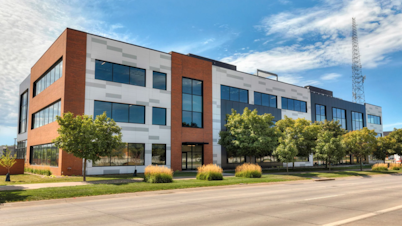
75F Makes IntelliPak RTU Integration Simple in High-End Office Space
Hubbell Realty installed 75F's IoT Building Management System with goals to set a flexible foundation for future building upgrades.