



Demystifying Building Automation Upgrades for Every Building
Building automation upgrades used to be synonymous with big, complex projects for hospitals, campuses, and skyscrapers—but that picture is now out of date. In a recent episode of AEE’s Full of Energy podcast, “Demystifying Building Automation Upgrades: From Mission-Critical Facilities to the Rest of the Built Environment,” Bob French, Chief Evangelist at 75F, joined Istiaque Baig of Trane Technologies to unpack what’s changed and where building owners are still stuck on old assumptions.
If you own, operate, or manage a portfolio of commercial buildings and you’re wondering whether an upgrade is worth the disruption, this conversation—and the takeaways below—were made for you.
Listen first: Tune into AEE’s Full of Energy episode “Demystifying Building Automation Upgrades” to hear the full discussion with Bob French and Istiaque Baig.
From Construction Projects to Technology Projects
For decades, building automation systems (BAS) were built around dedicated servers, custom programming, proprietary controls, and integrations that only made economic sense for the largest, most complex facilities. Mid-market and small buildings were often left out or forced to live with “inferior” products that could not deliver the same functionality as the big systems.
Bob French sums up the shift this way:
“Twenty years ago, a BAS required dedicated servers, custom extensive programming, proprietary systems, integration work, and projects didn’t make economic sense, but only for the larger facilities… Today, there are platforms that eliminate servers… AI can automate optimization… and this brings the total cost of installation down by about half or more. The installed cost didn’t get cut in half because of cheaper hardware, it got cut by simplicity.”
As Baig adds, decoupling the hardware from the software now allows building automation intelligence to live on more affordable devices—even thermostats—while still leveraging a robust, cloud-connected backbone. That means owners of smaller facilities no longer have to compromise on quality or capability simply because of building size or budget.
This is where modern, cloud-native building automation systems like 75F’s platform shine: by eliminating on-prem servers, reducing wire pulls through wireless and IoT, and standardizing connections via open protocols, they turn what used to be a major construction effort into a manageable technology project.
Four Building Automation Myths That Need to Go
Myth 1 – “Controls will fix mechanical problems.”
One of the biggest misconceptions Baig sees is the belief that simply upgrading controls will fix underlying mechanical deficiencies. In reality, sensors and software cannot compensate for an air handler that is mis-sized, a chiller that is failing, or ductwork that was never properly balanced.
“Controls can’t fix mechanical deficiencies… if there are specific issues with the mechanical systems, they need to be addressed at the same time.”
For successful upgrades, owners must think holistically about the HVAC system—from equipment through sensors, controls, and software—and invest in mechanical expertise alongside automation.
Myth 2 – “We need to rip and replace everything.”
Another costly myth is that upgrading BAS requires tearing out every existing component and starting over. In practice, many projects find better ROI by phasing upgrades and reusing existing infrastructure: communication wiring, sensors, and end devices often can be retained or bridged into new systems.
Baig describes modular, low-invasive strategies that start with the most mission-critical or high-value systems, delivering early wins that subsidize later phases. For example, a large occupied building might first modernize its chilled water system, using parallel systems and short overnight cutovers to maintain uptime, before moving floor by floor through air-side upgrades.
Myth 3 – “My building is too small for BAS.”
Bob points out that many owners still assume building automation is only for skyscrapers, campuses, or large hospitals. Ironically, smaller buildings often have the worst controls performance because they have been overlooked for decades.
“Most owners assume that a BAS is for skyscrapers or for campuses or hospitals… but nowadays, small buildings can have the worst control performance because they’ve been ignored and overlooked.”
This neglect shows up as:
Simultaneous heating and cooling
Economizers that don’t operate correctly or at all
Failed sensors creating false sequences
Thermostats set to run 24/7, even when spaces are unoccupied
Modern, cloud-based BAS platforms can deliver standardized scheduling, fault detection, and optimization across portfolios of small retail stores, medical offices, and assisted living centers—unlocking significant savings and comfort improvements in the very buildings that were once left out.
Myth 4 – “We need specialized in-house controls experts.”
Historically, BAS upgrades required deep, specialized expertise and long on-site programming sessions, contributing to the perception that only large institutions with dedicated staff could take on these projects. But as Baig notes, software has become far more consumer-grade, which lowers the barrier to adoption, especially for smaller operators.
Bob echoes this shift on the implementation side:
“Building automation used to be a construction project… but now, really, it’s a technology project… Nowadays, with wireless communications and sensors, using the cloud, reusing existing equipment, remote configuration, that really changes the game in terms of the installation.”
Pre-programmed controllers, remote commissioning, AI-guided troubleshooting, and more intuitive front-ends mean building owners can rely on everyday contractors and remote experts rather than rare specialists, easing both deployment and ongoing operations.
Where Building Automation ROI Really Comes From
The AEE audience is naturally focused on energy, but Bob stresses that return on investment (ROI) for BAS upgrades is broader than just kilowatt-hours saved.
“When it comes to return on investment in the mid-market to small buildings, it’s not always just about energy savings… It’s also, especially in retail, about unexpected HVAC trouble, comfort of the occupants, and the cost of maintenance.”
From the podcast, several high-ROI building types emerge:
Retail chains and commercial portfolios – Benefit from better scheduling, reduced runtime, fault detection and diagnostics, demand control ventilation, and remote troubleshooting, which collectively reduce unplanned outages and service calls across hundreds of sites.
Medical offices and assisted living centers – Where occupant comfort, air quality, and reliability are paramount, modern BAS can help ensure systems run only when needed, economizers deliver free cooling, and alarms are prioritized correctly.
Buildings in high demand-charge markets – As Baig notes, markets with strong incentives to manage peak electric demand often see very high paybacks from automation upgrades that optimize loads during critical periods.
Beyond direct utility savings, owners are increasingly willing to “dollarize” soft benefits like uptime, resilience, operator efficiency, and the cost of doing nothing—making the business case for BAS upgrades more compelling.
What Modern BAS Retrofits Actually Look Like
If you’re imagining months of construction and permitting, the podcast paints a different picture for modern controls-only projects.
Baig highlights a few practical realities:
Controls-only upgrades rarely require permits, enabling faster timelines and more flexible phasing.
Wireless communication reduces the need to run new wires through occupied spaces, lowering labor costs and disruption.
Existing communication wiring, sensors, and end devices can often be reused “within reason,” minimizing demolition and helping maintain continuity of operations.
Controllers can be pre-programmed off-site, then deployed and commissioned quickly on-prem, reducing on-site programming time.
Bob adds that, with these advances, a typical retail installation with two or three rooftop units can now be completed in a day instead of a week—a major difference for environments where downtime is strongly discouraged.
This style of retrofit aligns closely with 75F’s deployment model, which leverages pre-configured, cloud-native hardware and software to simplify installation and commissioning across portfolios.
AI, Remote Management, and the Technician Gap
The episode also tackles the question on many minds: will AI fully automate buildings in the near future? Bob’s view is pragmatic.
“There is a misconception that AI is just going to completely automate a building… We’re not there yet and not really even close to it… Instead of thinking of it as an autonomous building, it’s really better at closing the technician gap.”
Key ways AI and remote management help today:
Earlier fault detection: Automation can flag issues sooner and help avoid major breakdowns.
Alarm prioritization: AI can help sort alarms by impact, guiding owners toward the most critical actions and the best use of limited time and budget.
Scaling across portfolios: Instead of custom logic crafted for each unique “snowflake” building, AI-assisted tools help standardize commissioning and optimization across dozens or hundreds of sites.
Remote support and “super users”: Cloud-based BAS allows experts to look over technicians’ shoulders from afar and enables one skilled operator to oversee multiple buildings efficiently.
Given the ongoing shortage of skilled HVAC technicians, these capabilities are becoming essential for both mission-critical facilities and everyday commercial buildings. Baig even suggests that the AI “megatrend” could attract more tech-savvy talent into building automation, especially through community colleges and vocational programs.
Cloud-native platforms are a prerequisite here: the compute needed for advanced analytics, benchmarking, and continuous commissioning is difficult to provide with isolated on-prem servers, but well suited to modern cloud infrastructure.
What Smaller Buildings Can Learn from Mission-Critical Facilities
Throughout the episode, the hosts explore differences and similarities between a typical 50,000-square-foot commercial building and major campuses or hospitals. Bob focuses on the mid-market, where priorities often center on:
Operating costs and energy use
Limited staff and maintenance budgets
Simplicity and ease of access to data and controls
Mission-critical facilities, meanwhile, have long embraced:
Continuous monitoring and proactive maintenance
Rigorous data-driven decisions about upgrades and operations
Integration of systems to support resilience and uptime
Thanks to cloud-native BAS and interoperable architectures, those capabilities are now within reach for smaller buildings as well. The universal advice from the episode is clear: invest first in robust automation infrastructure (sensors, controllers, connectivity) and mechanical expertise, then layer AI and renewables on top.
Owners should ask:
Do we have the right sensors and controllers in the right places?
Are we monitoring all critical spaces properly?
When we upgrade equipment, are we making assets smarter, more connected, and easier to manage?
BAS that support benchmarking and automated “site checkout” tools can help answer those questions by creating baselines, measuring degradation, and generating punch lists of mechanical and controls issues to prioritize.
Key Takeaways for Owners and Operators
Pulling the podcast together, owners and operators considering building automation upgrades should keep a few principles in mind:
Think beyond energy savings: Comfort, reliability, maintenance, and operator efficiency are major contributors to ROI, especially across portfolios of smaller sites.
Upgrade both brains and muscles: Controls and mechanical systems must be considered together; automation cannot fix hardware that is failing or poorly designed.
Leverage modular, low-invasive strategies: Reuse wiring and sensors where possible, phase upgrades by criticality, and use early wins to fund later phases.
Embrace cloud-native, wireless, and AI-guided approaches: These technologies reduce installation time, lower skill barriers, and enable portfolio-wide optimization and remote support.
Apply mission-critical lessons to everyday buildings: Continuous monitoring, proactive maintenance, and data-driven decisions are no longer exclusive to hospitals and large campuses.
Listen to the Full AEE Episode and Explore What’s Possible
If you’re exploring a BAS upgrade—whether you manage a single mission-critical facility or a portfolio of small commercial buildings—the insights from AEE’s Full of Energy episode with Bob French and Istiaque Baig are a powerful starting point.podcasts.
Listen and learn Demystifying Building Automation Upgrades: From Mission-Critical Facilities to the Rest of the Built Environment—Hosted by AEE’s Full of Energy podcast, featuring Bob French of 75F and Istiaque Baig of Trane Technologies.
We’d love to hear from you: which of these myths or challenges resonates most with your buildings right now?
Talk to 75F about your buildings. Ready to see how cloud-native building automation, AI-driven insights, and modular retrofit strategies could work in your own buildings or portfolio?





Healthier Buildings Series: Real Estate Strategies in Times of Uncertainty
Commercial real estate is in a completely different landscape today than it was 12 months ago.

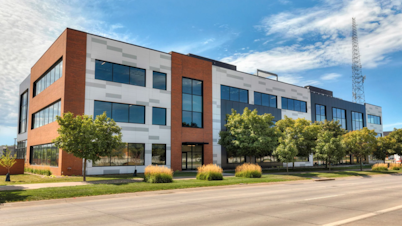
75F Makes IntelliPak RTU Integration Simple in High-End Office Space
Hubbell Realty installed 75F's IoT Building Management System with goals to set a flexible foundation for future building upgrades.