





Demand Response 101: How Commercial Buildings Can Get Paid to Save Energy
The U.S. electric grid is under more stress than at any point in recent history. Grid Strategies projects that five-year peak load growth has surged five-fold — from 23 GW to as much as 128 GW by 2029 — driven by data centers, manufacturing expansion, and building electrification. Meanwhile, NERC projects summer peak demand to grow by more than 132 GW over the next decade.
For utilities, that means expensive peaker plants, strained transmission infrastructure, and the constant threat of blackouts on the hottest days of the year. For your building, it means an opportunity.
Demand response programs let commercial buildings get paid — real money — for temporarily reducing electricity use when the grid needs relief most. The catch? Most buildings are still leaving that money on the table. This guide explains how demand response works, what the incentives look like, and why the right building automation system is the difference between a profitable participation experience and one that disrupts tenants and staff.
What Is Demand Response, and How Does It Work?
Demand response (DR) is a voluntary arrangement in which electricity customers — commercial buildings, manufacturers, industrial facilities — agree to reduce or shift their electricity consumption during peak demand periods in exchange for financial incentives. When the grid is under stress (think a 95°F afternoon in August with every air conditioner in the city running at full blast), utilities and grid operators call a "demand response event" and enrolled participants reduce their load on cue.
The mechanics are straightforward:
Grid operator or utility signals stress. A Regional Transmission Organization (RTO) like PJM, CAISO in California, or ERCOT in Texas detects that demand is approaching dangerous levels.
Event notification is sent. Enrolled participants receive day-ahead, two-hour, or sometimes real-time notification.
Building reduces load. HVAC setpoints are adjusted, lighting is dimmed, non-critical equipment is cycled off — for anywhere from two to six hours.
Building earns incentive payments. Compensation flows based on how much load was committed (capacity payments) and how much was actually curtailed during events (performance payments).
According to the FERC's 2024 Assessment of Demand Response, demand response resources across the seven major U.S. wholesale markets totaled more than 33,000 MW in 2023 — roughly 6.5% of wholesale market peak demand. That represents enormous collective capacity, but also enormous room for growth: Only 6.0% of U.S. energy consumers currently participate in a retail demand response program, according to the American Council for an Energy-Efficient Economy.
There are two primary program structures most commercial buildings encounter:
Capacity-based programs: Buildings commit to being available to reduce load during a defined season (typically summer). They earn monthly capacity payments for that commitment — whether or not an event is ever called.
Performance/event-based programs: Buildings earn per-kWh incentives each time they successfully curtail load during a called event.
Many programs blend both structures.
Why HVAC Is the Key to Demand Response
If you want to participate in demand response, HVAC is your most powerful lever. According to the U.S. Department of Energy's Quadrennial Technology Review, the buildings sector accounts for about 76% of all U.S. electricity use — and within individual commercial buildings, HVAC systems consume between 30% and 40% or more of total energy depending on building type and climate. Cimetrics estimates HVAC at 30–60% of total commercial building energy, with heating and cooling typically dominating.
That makes HVAC both the primary target for demand response and the biggest risk. The "thermal flywheel" effect of building mass means that a well-timed HVAC setback — say, allowing indoor temperature to drift two degrees over a two-hour window — keeps occupants comfortable while meaningfully reducing electrical load. But a blunt, indiscriminate cutback can leave some zones freezing and others sweltering.
This is precisely why the method of HVAC demand response matters as much as the participation itself. Traditional load-shedding systems cut power indiscriminately across a building or portfolio. Modern, intelligent systems make zone-level decisions that preserve comfort where people actually are.
What Are the Incentive Payments Worth?
The financial case for demand response is compelling — and it's gotten stronger as grid stress has grown. Incentive structures vary significantly by program and market, but here's a representative look:
PJM (Mid-Atlantic and Midwest, 13 states + DC):
Through PJM's Emergency Load Response Program, participating businesses can earn between $98,000 and $170,000 per megawatt per year, depending on market outcomes, program rules, location, and performance. A facility with 2 MW of curtailable load could realize $200,000 to $340,000 annually. Smaller facilities — those with as little as 100 kW of curtailable load — can participate through aggregators.
California (CAISO / PG&E / SCE / SDG&E):
California has among the most robust demand response programs in the country. Southern California Edison's Automated Demand Response Control program offers up to $200 per kW of verified load reduction (Customized Control Incentives) and up to $300 per kW for smaller Express Control Incentives. California's Base Interruptible Program (BIP), available to both PG&E and SCE customers, offers monthly peaktime credits that range from $6.30/kW-month to $26/kW-month depending on season and provider. SMUD's PowerDirect program offers $175/kW for automated energy reduction plus $7.00/kW per month.
Los Angeles (LADWP):
LADWP's commercial demand response program offers $10/kW monthly capacity payments for day-ahead notification and $15/kW for two-hour advance notification, plus $0.25/kWh for energy actually curtailed during events. Since 2015, LADWP participants have collectively saved $8 million in incentives and avoided 4,836 MWh of peak load.
Texas (ERCOT):
ERCOT uses multiple demand response mechanisms, including the Emergency Response Service (ERS), Responsive Reserve Service (RRS), and the ERCOT Contingency Reserve Service (ECRS). All are capacity-based programs that pay commercial participants for availability. ERCOT saw the largest annual increase in demand response resources in 2024 among the major wholesale markets, adding approximately 486 MW of enrolled capacity in a single year.
The bottom line: for a mid-size commercial building with 200–500 kW of curtailable HVAC load, participation in a well-structured demand response program can generate tens of thousands of dollars annually — with minimal disruption, if the right controls are in place.
The Problem with Manual Demand Response
Here's why most buildings don't participate — or participate poorly: traditional demand response is a manual headache.
When an event is called, facility managers receive a notification, then scramble to manually adjust thermostats, cycling schedules, and equipment setpoints across the building. In a multi-zone office, a hospital, a school, or a retail center, that process is error-prone. The result is either:
Under-response: The building doesn't curtail enough, misses its performance target, and fails to earn the full incentive — or faces a penalty.
Over-response: The building cuts too aggressively, temperatures swing, tenants complain, and the occupancy experience suffers.
Meanwhile, legacy building management systems (BMS) that do automate DR events often do so with blunt-force logic: cut setpoints uniformly across every zone, regardless of occupancy. A conference room with 40 people in a presentation and an empty storage room get treated identically. Comfort and air quality suffer in the spaces that matter.
This is the core problem that automated, intelligent demand response solves.
How Smart Demand Response Works — and Why It's Different
Learn About 75F's Smart Demand Response →
75F's Smart Demand Response is an OpenADR-compliant solution that uses AI and machine learning to respond to grid signals intelligently — not indiscriminately. The difference is occupancy-aware, zone-level control.
When a demand response event is triggered, 75F's system doesn't simply cut power across the board. Instead, it:
Prioritizes occupied zones. Real-time onboard occupancy sensors identify where people are in the building. Those zones are protected; setback strategies are applied where no one is present.
Optimizes air quality. Fresh outside air intake is continuously adjusted based on weather data and occupancy, maintaining indoor air quality standards even during load-shed events.
Redirects conditioned air dynamically. Rather than reducing total airflow indiscriminately, the system continuously redirects conditioned air to the zones where it's needed most.
Operates on existing equipment. 75F works with any HVAC equipment — no forklift replacement required. The system installs on existing rooftop units, VAV systems, and other commercial HVAC configurations.
The result is demand response that meets utility performance targets without generating tenant complaints — enabling building owners to consistently earn their full incentive payments. And because 75F is a full-stack IoT Building Management System, the same platform delivering demand response is also delivering baseline energy savings and occupancy analytics around the clock, not just during events.
Those baseline savings are substantial and independently validated. An NREL study modeled 75F's applications across DOE benchmark building types in 16 U.S. cities representing all major climate zones, finding total building energy savings ranging from 14% to 31% depending on building type and construction vintage. The Gas Technology Institute documented up to 45% gas and electricity savings in real-world deployments with blind A/B testing. Across all real-world deployments, 75F customers average 41.8% HVAC energy savings.
For HVAC contractors looking to grow their business, the combination of utility incentives and 75F's platform creates a powerful value proposition. Energy Efficiency Resources (EER), a U.S.-based energy solutions contractor, partnered with 75F to access a utility's Advanced Rooftop Control incentive program — getting 75F's Outside Air Optimization approved as a prescriptive measure. The result: customers receive energy savings and enhanced comfort at no out-of-pocket cost, and EER projects 40% revenue growth by ramping installations to 30 buildings per week.
State and Regional Programs: Where to Start
Demand response programs vary significantly by market and utility. Here's a quick orientation:
PJM (Pennsylvania, New Jersey, Maryland, Delaware, Ohio, Indiana, Illinois, Michigan, Virginia, West Virginia, North Carolina, and DC):
PJM operates one of the most liquid capacity markets in the world. Commercial facilities can participate directly or through aggregators. The Emergency Load Response Program and the Demand Response Resource program are the primary pathways.
California (CAISO):
California's demand response ecosystem is the most complex and arguably most rewarding in the country, with programs offered by PG&E, SCE, and SDG&E, plus the state's energy codes increasingly requiring automated demand response capability in new commercial construction. California regulators have mandated the use of OpenADR 2.0-certified products for automated demand response participation, which means systems like 75F are plug-and-play for utility program enrollment.
Texas (ERCOT):
ERCOT's isolation from the national grid — it has minimal interconnections with neighboring regions — makes demand response especially valuable for grid stability. Texas Senate Bill 6 (signed into law in 2025) mandates the creation of a demand response program specifically for large loads, signaling continued policy investment in commercial building participation.
Midwest (SPP, MISO):
The Southwest Power Pool saw demand response capability grow by 119% in a single year (2022–2023), making it one of the fastest-growing demand response markets in the country. MISO serves 15 states across the Midwest and South.
To find specific utility programs in your service territory, the DOE's Office of Electricity maintains resources on grid modernization and demand flexibility programs across the country.
Is Your Building a Good Candidate?
Most mid-size commercial buildings qualify for some form of demand response. General eligibility criteria:
Minimum curtailable load: Most programs start at 50–100 kW of demonstrable load reduction. Aggregators can pool smaller buildings together.
HVAC control capability: You need a BMS or smart controller that can receive automated signals and execute setbacks without manual intervention.
Availability during peak periods: Programs typically run June through September (cooling season), with events during afternoon peak hours (2–9 PM is common).
Predictable load patterns: Facilities with consistent occupancy schedules — offices, schools, retail, healthcare — tend to perform best.
Buildings that already have some form of smart controls are best positioned to start earning quickly. Buildings without existing automation can install a system like 75F and qualify for utility incentives that cover part or all of the installation cost — making the upfront investment minimal or zero in many markets.
The Bottom Line
Demand response isn't a theoretical grid policy concept. It's a revenue-generating program available to commercial buildings right now — one that pays building owners and facility managers for doing something they'd want to do anyway: use energy more intelligently.
The grid needs flexible, responsive load. Commercial buildings — with their HVAC systems, their scheduling flexibility, and their large footprint in total electricity consumption — are the perfect participants. The missing ingredient, historically, has been control systems capable of responding to grid signals without sacrificing the comfort of occupants.
That gap is now closed.
Find Out If Your Building Qualifies for Demand Response Incentives →
Sources
1. Grid Strategies — Strategic Industries Surging: Driving US Power Demand (National Load Growth Report, 2024): https://gridstrategiesllc.com/wp-content/uploads/National-Load-Growth-Report-2024.pdf
2. FERC — 2024 State of the Markets Report (March 2025): https://www.ferc.gov/sites/default/files/2025-03/25_State-of-the-Market_0320_1200.pdf
3. FERC Staff — 2024 Assessment of Demand Response and Advanced Metering: https://www.ferc.gov/sites/default/files/2024-11/Annual Assessment of Demand Response_1119_1400.pdf
4. FERC Staff — 2025 Assessment of Demand Response and Advanced Metering (December 2025): https://www.ferc.gov/sites/default/files/2025-12/25_Annual Assessment of Demand Response_1212.pdf
5. American Council for an Energy-Efficient Economy (ACEEE) — Faster and Cheaper: Demand-Side Solutions for Rapid Load Growth (2026): https://www.aceee.org/research-report/u2601
6. U.S. DOE — Chapter 5: Increasing Efficiency of Building Systems and Technologies (Quadrennial Technology Review, 2015): https://www.energy.gov/sites/prod/files/2017/03/f34/qtr-2015-chapter5.pdf
7. U.S. EIA — Use of Energy in Commercial Buildings: https://www.eia.gov/energyexplained/use-of-energy/commercial-buildings.php
8. Cimetrics — Top Demand Response HVAC Strategies in 2025: https://cimetrics.com/demand-response-hvac-strategies/
9. Rodan Energy — PJM Demand Response: A Strategic Advantage for Businesses: https://rodanenergy.com/pjm-demand-response-business-revenue/
10. Southern California Edison — Automated Demand Response Control Incentives Program Handbook (2024): https://www.sce.com/sites/default/files/custom-files/PDF_Files/Auto-DR_Program_Handbook_02.16.2024.pdf
11. LADWP — Demand Response Program: https://www.ladwp.com/commercial-services/programs-and-rebates-commercial/demand-response-program
12. PCI Energy Solutions — ERCOT Demand Response Programs (2024): https://www.pcienergysolutions.com/2024/07/31/ercot-demand-response-programs-enhancing-grid-reliability-in-texas/
13. Rao Konidena — FERC Staff Issues 2024 Assessment of Demand Response and Advanced Metering (December 2024): https://raokonidena.substack.com/p/ferc-staff-issues-2024-assessment
14. 75F — Optimizing Commercial Buildings with Smart Demand Response: https://www.75f.io/news/optimizing-commercial-buildings-with-smart-demand-response/
15. 75F / NREL — Energy Savings by Building Type: https://www.datocms-assets.com/55631/1708966383-nrel-results-by-building-types_combined-1.pdf
16. 75F — GTI Study Supports Savings Potential of Dynamic Airflow Balancing: https://www.75f.io/news/gti-study-supports-savings-potential-of-dynamic-airflow-balancing/
17. 75F — Energy Efficiency Resources Case Study: https://www.75f.io/case-studies/energy-efficiency-resources/
18. U.S. DOE Office of Electricity: https://www.energy.gov/oe/





Healthier Buildings Series: Real Estate Strategies in Times of Uncertainty
Commercial real estate is in a completely different landscape today than it was 12 months ago.

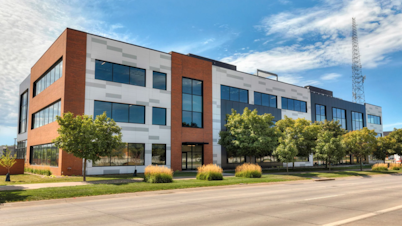
75F Makes IntelliPak RTU Integration Simple in High-End Office Space
Hubbell Realty installed 75F's IoT Building Management System with goals to set a flexible foundation for future building upgrades.