




The Hidden Cost of Poor Indoor Air Quality in Commercial Buildings
Your building may be silently draining your bottom line—and most occupants will never identify the source. According to the U.S. Environmental Protection Agency, Americans spend approximately 90 percent of their time indoors, where concentrations of some pollutants are often 2 to 5 times higher than typical outdoor levels. In commercial buildings, where office workers spend the majority of those hours, the consequences are financial, not just physical: poor indoor air quality (IAQ) costs the U.S. economy as much as $168 billion annually in medical expenses, lost productivity, and absenteeism.
For building owners, HR leaders, and facility managers, this is not a comfort issue. It is a business continuity issue. And it is one that modern building technology can now solve—automatically.
What "Poor IAQ" Actually Means in a Commercial Building
Indoor air quality is a measure of what occupants are breathing and whether those conditions support health, comfort, and cognitive function. In commercial buildings, IAQ deteriorates from a range of sources: elevated CO₂ from occupant respiration, volatile organic compounds (VOCs) off-gassing from furniture and finishes, particulate matter, mold, and inadequate fresh air exchange.
The most prevalent and actionable culprit is CO₂ accumulation. Unlike outdoor air, which sits at roughly 400 parts per million (ppm), occupied office spaces routinely reach 1,000 ppm or higher—particularly in conference rooms and densely occupied zones. At 1,000 ppm, most people experience noticeable fatigue. Above 1,400 ppm, the effects on decision-making are measurable and dramatic.
The EPA's Building Assessment Survey and Evaluation (BASE) Study, which examined 100 randomly selected public and commercial office buildings nationwide, found that inadequate mechanical ventilation is a systemic problem. Many buildings were not designed—or are not operated—to provide adequate amounts of outdoor air to their occupants.
The Usual Suspects in Commercial Building IAQ Failure
Under-ventilation: HVAC systems sized for peak occupancy but not modulated for actual occupancy, resulting in chronic over- or under-ventilation.
CO₂ accumulation: Especially in conference rooms, classrooms, and open-plan offices during peak hours.
VOC off-gassing: From carpeting, adhesives, printers, and cleaning products.
Humidity imbalance: Too high (mold risk) or too low (dry mucous membranes, increased infection transmission).
Sick building syndrome (SBS): The EPA notes that poor IAQ and inadequate ventilation are primary drivers of SBS, in which occupants report symptoms—headaches, fatigue, difficulty concentrating—that resolve when they leave the building.
The Cognitive Performance Hit: What the Science Shows
The most compelling business case for IAQ investment comes not from safety compliance, but from performance research. In landmark work from the Harvard T.H. Chan School of Public Health, the COGfx Study measured the cognitive function of knowledge workers under different indoor environmental conditions.
The findings were startling. In Study 1, participants working in green building environments with enhanced ventilation scored 101% higher on cognitive function tests than participants in conventional building conditions. When CO₂ levels climbed from roughly 550 ppm to 1,400 ppm—levels that occur routinely in commercial offices—cognitive scores dropped by 50% across domains including crisis response, information usage, and strategic thinking.
A later COGfx global study conducted across 300 office workers in six countries confirmed the effect in real-world settings: for every 500 ppm increase in CO₂, workers showed response times 1.4–1.8% slower and throughput 2.1–2.4% lower—with no lower threshold below which effects disappeared.
Put plainly: every meeting held in a stuffy, under-ventilated conference room is a meeting where your team is operating at a fraction of their cognitive capacity.
The productivity implications scale rapidly. Research published in the WELL Building Institute's resources estimates that just a 10% improvement in work performance can offset the full cost of building construction and operation—because workforce compensation is up to 100 times higher than the cost of building operations. The typical payback on IAQ investment is less than two years.
The Dollar-by-Dollar Cost to Your Organization
Beyond cognitive drag, poor IAQ produces measurable costs across three categories that facility managers and HR leaders track directly:
1. Absenteeism and Sick Days
Poor IAQ is a primary driver of sick building syndrome, which the World Health Organization estimates affects as many as 64 million U.S. office workers and teachers. The American Lung Association reports that asthma alone causes approximately 14.5 million lost workdays annually. Research cited by the CDC Foundation puts productivity losses linked to absenteeism at $225.8 billion annually, or $1,685 per employee.
IAQ interventions directly reduce this exposure. Buildings with lower ventilation rates have been shown to carry a 130% increase in sick leave compared to well-ventilated buildings. Conversely, doubling the outdoor air supply rate in an office has been estimated to reduce sick leave by roughly 10%.
2. Presenteeism: The Larger, Invisible Cost
Absenteeism is visible. Presenteeism—employees physically at work but cognitively impaired—is far more expensive and far harder to detect. High CO₂ is a direct cause. Workers in poorly ventilated spaces show reduced concentration, impaired decision-making, and slower processing speed, while managers typically attribute the slump to stress, workload, or personal factors.
Studies show that employees in offices with poor IAQ are 6% to 9% less productive on measurable output tasks. Across a team of 100 employees earning an average salary of $65,000, a 7% productivity loss represents roughly $455,000 per year in unrealized output.
3. Tenant Turnover and Lease Risk
In commercial real estate, IAQ has become a lease renewal issue. Real estate professionals report that tenant complaints during lease renewals are increasingly tied to air quality and thermal discomfort. A U.S. workers survey cited by WellAir found that air quality ranked as employees' number-one concern about returning to the office post-pandemic.
Buildings that cannot demonstrate healthy indoor environments—through sensor data, WELL or LEED certification, or real-time transparency dashboards—face growing risk of tenant attrition. As ESG reporting matures, IAQ data is increasingly expected as a disclosure metric.
Ready to see what your building's air looks like right now?
See How 75F Monitors IAQ in Real Time →
The Post-COVID Regulatory Shift: IAQ Is Now an Obligation
The COVID-19 pandemic fundamentally changed the regulatory and social landscape for indoor air. As Harvard's Joe Allen has noted, "fundamental shifts" have taken place in how governments, businesses, and the public think about indoor air—and "the scientific and medical literature's being rewritten."
Key developments since 2020 include:
EPA Clean Air in Buildings Challenge (2022): A call to action for building owners and operators to assess IAQ and make ventilation and filtration improvements, tied to the National COVID-19 Preparedness Plan.
ASHRAE Standard 241 (2023): A new standard for "Control of Infectious Aerosols," setting clean air rate targets for commercial buildings that go beyond traditional ventilation minimums.
ASHRAE 62.1-2024/2025 updates: Revised ventilation rates and new demand control ventilation (DCV) sequences for commercial buildings, making CO₂-sensor-based DCV a recognized compliance pathway.
State-level mandates: Washington State adopted MERV 13 filter requirements in its building code (effective 2023); California established COVID-19 prevention ventilation rules for workplaces.
WELL Building Standard requirements make IAQ measurement explicit. Under WELL v2, buildings must demonstrate CO₂ levels of 900 ppm or less in occupiable spaces (Feature A03), with enhanced points available for achieving 750 ppm or lower. Continuous CO₂ monitoring is required to earn ventilation optimization credits—a prerequisite many tenants now expect as a baseline.
For building owners, the message is clear: IAQ is no longer optional. The question is whether your building can measure it and manage it in real time.
Why CO₂ Monitoring Is the Linchpin of Commercial IAQ Strategy
CO₂ is not just a pollutant to mitigate—it is the most reliable real-time proxy for ventilation adequacy in an occupied space. When CO₂ rises, it signals that fresh air supply is insufficient for the current number of occupants. That means other pollutants—VOCs, bioaerosols, moisture—are also building up.
ASHRAE's standard for demand-controlled ventilation explicitly permits buildings to modulate outdoor airflow based on actual occupancy and CO₂ readings—rather than provisioning for peak occupancy at all times. This is the technical foundation of demand-controlled ventilation (DCV): supply fresh air when and where it is needed, and reduce ventilation energy when spaces are empty or lightly occupied.
The challenge for most buildings is that traditional systems cannot execute true DCV. Fixed damper positions, single-zone control, and the absence of zone-level sensors mean that hallways get over-ventilated while conference rooms become CO₂ chambers. Occupancy is assumed, not measured.
This is exactly the problem that 75F's HyperStat is designed to solve. The HyperStat is a multi-sensor smart thermostat that measures CO₂, temperature, humidity, occupancy, light, sound, and VOCs at the zone level—providing the granular data that intelligent DCV requires. Every zone becomes a data point. Every spike in CO₂ triggers an automated ventilation response.
How 75F Turns IAQ Data Into Automatic Action
Most IAQ monitoring tools tell you there is a problem. 75F's building automation platform does something about it.
The 75F system uses AI-driven sequences to continuously process zone-level sensor data from the HyperStat and automatically adjust fresh air delivery based on real-time occupancy and CO₂ readings. When CO₂ rises in a conference room, the system increases outdoor air to that zone. When the building empties in the evening, ventilation is scaled back proportionally—eliminating the energy waste of over-ventilating empty spaces.
75F's heatmap filters for CO₂ visualization give facility managers a building-wide view of IAQ conditions at any moment: which zones are at risk, which are performing within target, and where HVAC adjustments are needed. This visibility transforms IAQ from a reactive compliance concern into a proactive operational metric.
The energy efficiency benefit is independently documented. A multi-year study by the National Renewable Energy Laboratory (NREL) validated 75F's Outside Air Optimization sequences across 14 building types, demonstrating total building energy savings of up to 31%—without retrofits or other mechanical changes. Smarter ventilation does not just improve air quality. It reduces energy bills.
This is the dual dividend that modern building operators are increasingly recognizing: better air, lower cost.
Building the Business Case for IAQ Investment
For facility managers presenting to leadership, the ROI framework for IAQ investment is straightforward:
| Cost Category | Annual Impact |
| Productivity loss (6-9% impairment) | $455K+ per 100 employees |
| Absenteeism (IAQ-related sick days) | $1,685 per employee (CDC) |
| Tenant turnover risk | 12-18 months of lost rent per departing tenant |
| Energy waste from fixed ventilation | 15-31% of total building energy spend |
The offsetting investments—zone-level CO₂ monitoring, demand-controlled ventilation, AI-driven HVAC sequences—typically pay back within 24 months. The Lawrence Berkeley National Laboratory has found that IAQ improvements can boost workplace performance by 10%, and that the economic benefit of IAQ optimization exceeds its cost by a factor of nearly 60.
For HR leaders, the framing is talent retention: employees who cannot identify why they feel foggy, headachy, or fatigued at work are more likely to attribute it to culture or management. Solving the environmental cause prevents invisible churn.
For corporate real estate professionals, the framing is asset value: buildings with documented, continuously monitored IAQ—and certifications to prove it—command stronger lease terms, lower vacancy rates, and better ESG scores.
What to Do Next
IAQ management does not require a complete building overhaul. It starts with measurement. You cannot manage what you cannot see—and most commercial buildings today are flying blind on the air their occupants breathe.
The practical starting point is deploying zone-level CO₂ and environmental sensors, establishing baselines, identifying the spaces where CO₂ routinely exceeds 1,000 ppm, and implementing automated demand-controlled ventilation to respond to what the data shows. That data also becomes the foundation for WELL certification credits, ESG reporting, and the kind of transparent IAQ communication that tenants and employees now expect.
75F's integrated platform—sensors, AI controls, and real-time dashboards—makes this possible without complex infrastructure changes. Buildings in commercial office, healthcare, education, retail, and hospitality sectors have deployed 75F to simultaneously improve occupant wellbeing and reduce energy costs, validated by independent research.
The air in your building affects every decision made inside it. The cost of doing nothing is already on your income statement—it just shows up as lost productivity, excess sick days, and tenant departures instead of a line item labeled "poor IAQ."
Take the first step toward a healthier, higher-performing building.
Request an Indoor Air Quality Assessment →
Sources
1. U.S. Environmental Protection Agency – Indoor Air Quality: https://www.epa.gov/report-environment/indoor-air-quality
2. U.S. Environmental Protection Agency – Building Assessment Survey and Evaluation (BASE) Study: https://www.epa.gov/indoor-air-quality-iaq/building-assessment-survey-and-evaluation-study
3. U.S. Environmental Protection Agency – IAQ in Offices and Large Buildings: https://www.epa.gov/indoor-air-quality-iaq/indoor-air-quality-offices-and-other-large-buildings
4. Harvard T.H. Chan School of Public Health – The COGfx Study: https://healthybuildings.hsph.harvard.edu/research/indoor-air-quality/cogfx/
5. Harvard T.H. Chan School of Public Health – COGfx Study: Cognitive Function Test Scores Doubled: https://thecogfxstudy.com/study-1/cognitive-function-tests-scores-doubled/
6. Harvard T.H. Chan School of Public Health – Office Air Quality May Affect Employees' Cognition, Productivity (Global COGfx Study 3): https://hsph.harvard.edu/news/office-air-quality-may-affect-employees-cognition-productivity/
7. Harvard T.H. Chan School of Public Health – Post-Pandemic Focus on Indoor Air Quality: https://hsph.harvard.edu/news/post-pandemic-an-increasing-focus-on-indoor-air-quality/
8. Environmental Health Perspectives (PubMed) – Associations of Cognitive Function Scores with CO₂, Ventilation, and VOC Exposures: https://pubmed.ncbi.nlm.nih.gov/26502459/
9. WELL Building Institute – WELL v2 Certification Overview: https://www.wellcertified.com/certification/v2-pilot/
10. WELL Building Institute – Poor Indoor Environment Costs: https://resources.wellcertified.com/articles/poor-quality-of-the-indoor-environment-in-buildings-is-costly/
11. ASHRAE – Standards 62.1 & 62.2, Ventilation and Acceptable Indoor Air Quality: https://www.ashrae.org/technical-resources/bookstore/standards-62-1-62-2
12. CDC Foundation – Worker Illness and Injury Costs U.S. Employers $225.8 Billion Annually: https://www.cdcfoundation.org/pr/2015/worker-illness-and-injury-costs-us-employers-225-billion-annually
13. WellAir – We Need Common IAQ Standards: https://www.wellairsolutions.com/news/we-need-a-common-set-of-standards-for-indoor-air-quality
14. 75F – Introducing the HyperStat: https://www.75f.io/news/introducing-75f-hyperstat-the-industrys-most-advanced-thermostat-and-humidistat/
15. 75F – NREL-Validated Energy Savings: https://www.75f.io/resources/





Healthier Buildings Series: Real Estate Strategies in Times of Uncertainty
Commercial real estate is in a completely different landscape today than it was 12 months ago.

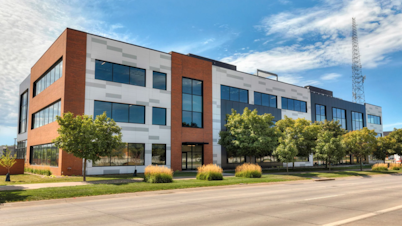
75F Makes IntelliPak RTU Integration Simple in High-End Office Space
Hubbell Realty installed 75F's IoT Building Management System with goals to set a flexible foundation for future building upgrades.