





Why Summer Is the Right Time to Upgrade Your School's BMS
If your school district is still running aging HVAC controls — or worse, no centralized building management system at all — the window to fix it before another school year starts is right now.
May and June are when facilities teams have the most leverage: construction crews are available, buildings are largely unoccupied, and budget decisions for capital projects are still being finalized. Wait until August, and you're scrambling. Plan now, and students will walk into a better building in September.
Here's what K-12 facilities directors need to know about modern building management systems (BMS) — and why the upgrade is more achievable than you think.
What Is a Building Management System — and Why Do Schools Need One?
A building management system (BMS), sometimes called a building automation system (BAS), is the central nervous system of a school facility. It monitors and controls HVAC, lighting, air quality, and energy use across your building — all from a single interface, often accessible from a phone or laptop.
For schools, this matters for three reasons:
1. Comfort directly affects learning. Research consistently shows that poor indoor air quality and temperature inconsistency reduce student focus and increase absenteeism. A properly tuned BMS keeps classroom temperatures stable and CO₂ levels in check — automatically, without staff having to manually adjust thermostats across a building.
2. Energy costs are a major line item — and a BMS cuts them. School districts spend an average of $8 per square foot annually on energy, making utilities one of the largest controllable expenses in any facilities budget. IoT-based building management systems like 75F have demonstrated up to 14% total-building energy savings in primary and secondary school facilities across 857 climate zones in the U.S. For a 100,000 sq ft school, that's a real number.
3. Staff time is finite — automation multiplies it. A modern cloud-based BMS lets one facilities manager monitor multiple buildings remotely, receive alerts before equipment fails, and make adjustments from anywhere. That's the difference between reactive maintenance and proactive operations.
The IRA Funding Angle: Federal Credits Can Cover 30–50% of Your Project
One of the most underutilized resources for K-12 facilities upgrades right now is the Inflation Reduction Act (IRA). School districts — as tax-exempt public entities — can claim direct pay energy tax credits and receive cash payments directly from the IRS for qualifying clean energy infrastructure projects.
This includes HVAC upgrades and building automation systems that improve energy efficiency. Depending on project scope, districts may be eligible for 30–50% credits toward equipment and installation costs.
If your district has been deferring a BMS upgrade because of budget, this changes the math considerably. A project that seemed out of reach at full cost may be entirely feasible at 50–70 cents on the dollar — and your mechanical contractor or integrator can help you document the qualifying work.
What to Look for in a School BMS: The 5 Things That Matter Most
Not all building management systems are created equal. Many legacy BAS platforms were designed for large commercial buildings by teams of operators — not for a single facilities director managing a K-12 campus. Here's what to prioritize when evaluating options:
1. Easy installation with minimal disruption School upgrades happen in compressed summer windows. Look for systems that retrofit onto existing equipment without requiring full HVAC replacement. 75F's IoT-based approach installs in days, not weeks, and works with most existing equipment.
2. Cloud-based remote access Your facilities team shouldn't have to be on-site to manage the building. A cloud-based BMS lets staff monitor and adjust systems from anywhere — critical for multi-site districts.
3. Indoor air quality (IAQ) monitoring built in Post-pandemic, IAQ is no longer optional for schools. Look for systems that monitor CO₂, humidity, and particulate levels in real time and automatically adjust ventilation.
4. Energy reporting that satisfies grant and audit requirements If you're applying for IRA credits, ESSER funds, or state energy grants, you'll need verifiable energy data. A modern BMS generates the reports you need automatically.
5. Scalability across buildings and campuses Your district isn't one building. Look for a platform that handles multi-site management from a single dashboard — so a district-wide upgrade doesn't mean a different system for every school.
Real Results: What Schools Are Seeing After Upgrading
At Cyprus Classical Academy, 75F's Dynamic Airflow Balancing system was deployed across 22 zones. The result? Students and teachers reported markedly increased comfort and even temperatures throughout the building — something the previous system couldn't achieve.
At Apple Valley Commons — a similarly multi-zone facility — building management gained 28% total energy savings (normalized for weather) alongside remote monitoring capabilities that let operators check building data and make changes from anywhere with internet access.
These aren't outlier results. They're what happens when a building stops fighting itself and starts running intelligently.
The Summer Upgrade Checklist for Facilities Directors
If you're evaluating a BMS upgrade for this summer, here's a practical starting checklist:
Audit your current HVAC control situation — are you on pneumatic controls, legacy DDC, or no central system?
Identify the buildings or zones with the most comfort complaints or the highest energy bills — these are your Phase 1 candidates
Talk to your mechanical contractor about IRA-qualifying project documentation
Request a site assessment from a BMS provider before June — installation windows fill up fast
Confirm your district's fiscal year close date — many districts need projects scoped before June 30
Ready to See What's Possible for Your District?
75F works with K-12 school districts across the country to deliver building automation that's fast to install, easy to operate, and built for the realities of educational facilities. Whether you're upgrading a single school or rolling out across a district, a site assessment takes less than an hour and shows you exactly what's possible.






Healthier Buildings Series: Real Estate Strategies in Times of Uncertainty
Commercial real estate is in a completely different landscape today than it was 12 months ago.

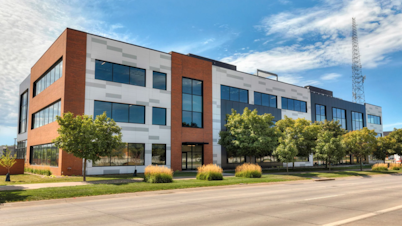
75F Makes IntelliPak RTU Integration Simple in High-End Office Space
Hubbell Realty installed 75F's IoT Building Management System with goals to set a flexible foundation for future building upgrades.