




The ROI of Smart Building Automation: What the Numbers Actually Say
Every building automation vendor has a compelling ROI story. One leading competitor recently commissioned a Forrester study claiming 155% ROI — a headline that spreads fast. But buried in the fine print: that figure bundles a 7% rental premium boost and a 67% chiller maintenance reduction for a composite organization managing 50 million square feet. The energy savings behind it? Just 10%.
If you are a CFO or building owner justifying a BAS investment from an operating budget, vendor-commissioned composites built on hypothetical portfolios will not pass your finance team's scrutiny. You need independently validated, building-type-specific data and a realistic model for your actual building.
This article provides both: actual energy cost baselines, independently validated savings percentages, installation cost ranges, utility rebate figures, and a worked ROI calculation you can bring into your next capital budget meeting.
What Commercial Buildings Actually Spend on Energy
Before calculating any ROI, you need an accurate baseline. The U.S. Energy Information Administration's Commercial Buildings Energy Consumption Survey (CBECS) found that 5.9 million U.S. commercial buildings spent $141 billion on energy in 2018 — the most recent complete survey. For office buildings:
Average electricity cost: ~$1.44 per sq ft annually; ~$0.30 per sq ft on natural gas (P3 Cost Analysts)
Total energy spend: roughly $1.74–$2.14 per sq ft per year for a typical commercial office
HVAC share: 40–51% of total utility costs (75F)
ENERGY STAR Portfolio Manager sets the national median Energy Use Intensity (EUI) for office buildings at 116.4 kBtu/sq ft/year. Buildings in the lower half of that distribution — the majority of commercial stock — carry the heaviest burden and the largest savings opportunity.
For a 50,000 sq ft office at the national median, annual energy spend runs approximately $87,000–$107,000 per year. That is the starting point for every ROI conversation.
What Building Automation Systems Typically Cost
BAS installation costs vary significantly by building size, system complexity, and whether the project is new construction or retrofit. Based on current contractor benchmarks:
| Building Size | Typical BAS Installation Range |
| Under 10,000 sq ft | $30,000 - $60,000 |
| 10,000 sq ft - 50,000 sq ft | $60,000 - $200,000 |
| 50,000 sq ft - 100,000 sq ft | $200,000 - $500,000 |
| 100,000+ sq ft | $500,000 - $1,000,000+ |
Sources: Unitemp MDI, Lange Mechanical Services
On a per-square-foot basis, traditional BAS projects typically run $2.50 to $7.50 per square foot, with the wide range reflecting system complexity, integration requirements, and labor market differences. Legacy wired systems carry the highest installation labor costs — a meaningful portion of total project spend.
This is where 75F's approach changes the equation. A time-and-motion study found that a traditional VAV installation — programming, wiring, and commissioning — took 3 hours 30 minutes per box. The 75F wireless installation took 45 minutes: a 4x reduction in labor per unit. That compresses project timelines and reduces total installation cost before a single kilowatt-hour is saved.
The Savings Side: What Independent Research Actually Shows
This is where vendor claims diverge sharply — and where the distinction between self-reported case studies and independent, peer-reviewed modeling matters.
Industry Averages
Traditional BAS savings claims from the industry generally run 5–15% on energy costs, depending on the baseline efficiency of the building before installation. Operational savings — reduced maintenance labor, lower repair frequency from better predictive management — add another 10–30% reduction on those line items (Mid-Atlantic Controls Corp.). These are meaningful but wide ranges that make financial modeling difficult.
The NREL Standard
75F's energy savings claims rest on a different evidentiary foundation. The National Renewable Energy Laboratory (NREL) — an independent U.S. Department of Energy research lab — conducted a multi-year modeling study of 75F's IoT Building Management System sequences across:
14 commercial building types
857 granular U.S. climate zones
Three utility rate structures
Over 100,000 unique model runs
The results: total building energy savings of up to 31% for medium office buildings, validated across retrofit and new construction scenarios. Other building types in the study show:
| Building Type | NREL-Validated Total Energy Savings |
| Medium Offices | Up to 31% |
| Small Offices | Up to 26% |
| Large Offices | Up to 23% |
| Strip Malls | Up to 26% |
| Large Hotels | Up to 26% |
| Outpatient Healthcare | Up to 21% |
| Stand-Alone Retail | Up to 19% |
| Secondary Schools | Up to 17% |
| Mid-Rise Apartments | Up to 17% |
Source: 75F NREL Study Resources
These savings exceed the current best ASHRAE Guideline 36 standard without requiring retrofits or equipment replacements — software and intelligent controls driving the gains.
A Note on the 155% ROI Claim
Johnson Controls' April 2025 Forrester TEI study is worth examining directly. The 155% figure aggregates energy savings (10%), chiller maintenance reduction (67%), workspace utilization improvements, and a 7% rental premium across a hypothetical composite managing 50 million square feet. The energy savings component — the variable under a facilities or operations budget — is a maximum of 10%. The headline is driven by real estate portfolio restructuring value, not building performance.
NREL's independent modeling of 75F's sequences shows energy savings of 17–31% for offices — without portfolio optimization assumptions. Download the NREL Study for Your Building Type
Access independent, building-type-specific energy savings data modeled across 857 U.S. climate zones. Download the NREL Study → 75f.io/resources
Real-World Results: 75F Case Studies
Independent modeling tells you the potential. Deployed case studies tell you what happens in practice.
Apple Valley Commons — A 60,000 sq ft, six-floor office complex built in 1986, installed 75F after years of temperature imbalances and high energy bills. Result: 28% total building energy savings (weather-normalized). Comfort complaints eliminated. The building's elevator room — previously overheating and forcing shutdowns — stabilized at a consistent temperature.
Hiranandani Hospital — A major Mumbai hospital with aged HVAC equipment and a partially functional existing BMS. 75F deployed Dynamic Chilled Water Balancing, Chiller Plant Manager, and IAQ monitoring. In 19 months, the facility saved 554,388 kWh — a 16% energy reduction across chiller and AHU operations — with 90 days of installation time and zero downtime.
Energy Efficiency Resources (EER) — An energy solutions contractor leveraged 75F's Outside Air Optimization through a utility rebate program for advanced rooftop controls. 75F's price point kept total project cost within rebate coverage, allowing EER to offer installations at zero out-of-pocket cost to customers. EER projects 40% annual revenue growth from the partnership.
Utility Rebates: The Variable That Changes Everything
One of the most underutilized tools in building automation ROI analysis is the utility rebate. In 2025, most major U.S. utility territories offer incentive programs specifically for BAS upgrades and advanced controls:
Prescriptive BAS rebates: $0.15–$0.35 per square foot across major utility territories (Emergent Energy Solutions)
Demand Controlled Ventilation rebates: $100–$200 per ton controlled (Idaho Power); $500 per sensor (Florida Power & Light); $0.18–$0.57 per sq ft (Ameren Missouri)
Energy Management System rebates: Up to $0.08 per kWh saved through BAS upgrades (ConEd); up to $2,000 for smart thermostat installations in commercial buildings (Efficiency Vermont) (Incentive Rebate 360)
Performance-based programs: $0.05–$0.10/kWh for verified operational savings, with some utilities guaranteeing two to three years of incentive payments (Emergent Energy Solutions)
For a 50,000 sq ft building, prescriptive BAS rebates alone can offset $7,500–$17,500 of project costs before a single kilowatt-hour is saved. Many IoT-based BAS solutions — including 75F's — qualify for these programs, given their demand-controlled ventilation and advanced rooftop control capabilities. This is precisely the mechanism that enabled EER's customers to receive 75F installations at zero direct cost.
Utility rebates can shorten payback periods from the industry average of 3–10 years without incentives to 1–5 years with them (Encentivenergy).
Worked ROI Example: 50,000 Sq Ft Office Building
Building profile: 50,000 sq ft office, built circa 1995 | Current EUI: 116 kBtu/sq ft/yr (national median) | Annual energy spend: $95,000 (~$1.90/sq ft blended electricity + gas)
Step 1 — Energy savings: Using NREL's validated range for medium offices, a conservative 20% savings assumption yields $19,000/year. At 25% (NREL mid-range): $23,750/year.
Step 2 — Installation cost: For a 50,000 sq ft office, BAS installation typically runs $60,000–$200,000. An IoT-based system with 4x faster installation labor positions at the lower end. Assume $90,000 installed.
Step 3 — Utility rebate: At $0.20/sq ft (mid-range of 2025 prescriptive BAS programs): 50,000 × $0.20 = $10,000 rebate. Net cost: $80,000.
Step 4 — Payback and ROI:
$80,000 ÷ $19,000/yr = 4.2-year payback (20% savings) $80,000 ÷ $23,750/yr = 3.4-year payback (25% savings)
These figures use energy savings only — maintenance labor reduction (10–30%), equipment life extension, and tenant retention all add to actual returns.
| Scenario | Annual Savings | Payback Period | 10-Year ROI |
| Conservative (20%) | $19,000 | 4.2 years | 138% |
| Mid-Range (25%) | $23,750 | 3.4 years | 197% |
| NREL Maximum (31%) | $29,450 | 2.7 years | 268% |
How to Calculate Building Automation ROI for Your Building
The five inputs you need:
Current annual energy spend — pull from 12 months of utility bills
Projected savings percentage — use NREL data for your building type and climate zone; conservative planning should use 15–20%
Installation cost estimate — get quotes; factor in whether wireless IoT installation reduces labor costs vs. traditional wired BAS
Available utility rebates — check your utility's commercial incentive programs; many BAS solutions qualify for prescriptive rebates without complex measurement and verification
Operational savings — estimate reduced facilities management labor and maintenance costs; industry data suggests 10–30% reduction in these line items
The formula:
ROI = (Total Benefits − Total Costs) ÷ Total Costs × 100
Payback Period = Net Installation Cost ÷ Annual Savings
For buildings with existing BAS infrastructure that is underperforming — a common situation in buildings more than 10–15 years old — the opportunity is often even better. Layering advanced IoT controls over existing equipment can deliver significant savings with minimal capital outlay, particularly when utility rebate programs cover a substantial portion of the upgrade cost.
The Bottom Line
Building automation ROI is not a single number. It is a function of your building's current efficiency baseline, your climate zone, the savings capability of the system you install, your local utility incentive programs, and the total installation cost — which varies significantly depending on whether you are deploying traditional wired BAS or a modern IoT-based system with faster installation.
What independent data consistently shows: well-implemented building automation pays back in 2–5 years for most commercial buildings. NREL's validation of 75F's sequences across 857 climate zones and 14 building types offers the most comprehensive, geographically specific dataset available for calculating realistic returns — not a five-interview composite weighted toward real estate portfolio optimization.
The numbers are there. The question is whether you are looking at the right ones.
Get a Custom Energy Savings Estimate for Your Building
You can model projected savings based on your building type, climate zone, and current energy spend — using the same NREL methodology. Try out our ROI Calculator here → 75f.io
Sources
U.S. Energy Information Administration — Commercial Buildings Energy Consumption Survey (CBECS): https://www.eia.gov/consumption/commercial/
ENERGY STAR Portfolio Manager — Energy Use Intensity Benchmarks: https://www.energystar.gov/buildings/benchmark/understand-metrics/what-eui
ENERGY STAR — Benchmark Your Building: https://www.energystar.gov/buildings/benchmark
P3 Cost Analysts — Average Office Electric Bill: https://www.costanalysts.com/average-office-electric-bill/
75F — NREL Study Resources by Building Type: https://www.75f.io/resources
75F — Apple Valley Commons Case Study: https://www.75f.io/case-studies/apple-valley-commons/
75F — Hiranandani Hospital Case Study: https://www.75f.io/case-studies/hiranandani-hospital/
75F — Energy Efficiency Resources (EER) Case Study: https://www.75f.io/case-studies/energy-efficiency-resources/
75F — Time-and-Motion: Traditional BMS vs. 75F Installation: https://www.75f.io/news/time-in-motion-75f-vs-traditional-vav-installation/
Unitemp MDI — How Much Does a Building Automation System Cost?: https://www.unitempinc.com/blog/how-much-does-a-building-automation-system-cost/
Lange Mechanical Services — Houston BAS Cost & Benefits Guide 2025: https://langemechanicalhouston.com/houston-building-automation-systems-cost-benefits-upgrades-2025-guide/
Mid-Atlantic Controls Corp. — Average Savings from a BAS: https://info.midatlanticcontrols.com/blog/average-savings-from-a-bas
Emergent Energy Solutions — Top Energy Efficiency Technologies Driving Utility Rebates in 2025: https://pasrecs.com/blog/efficiency-technologies-driving-utility-rebates-2025
Encentivenergy — Smart Building Utility Rebates: https://blog.encentivenergy.com/news/smart-building-utility-rebates-transform-your-upgrade-strategy
Incentive Rebate 360 — Energy-Efficient Technologies That Qualify for Rebates: https://incentiverebate360.com/energy-efficient-technologies-that-qualify-for-rebates-a-comprehensive-guide/
Johnson Controls — Forrester TEI Study: OpenBlue 155% ROI: https://www.johnsoncontrols.com/media-center/news/press-releases/2025/04/16/new-study-finds-johnson-controls-openblue-smart-building-platform-drives-efficiency-and-cost-savings
IRCAI — 75F IoT Building Management System Entry: https://ircai.org/top100/entry/75f-iot-building-management-system/





Healthier Buildings Series: Real Estate Strategies in Times of Uncertainty
Commercial real estate is in a completely different landscape today than it was 12 months ago.

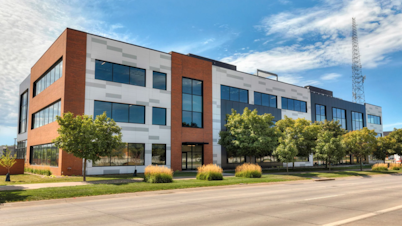
75F Makes IntelliPak RTU Integration Simple in High-End Office Space
Hubbell Realty installed 75F's IoT Building Management System with goals to set a flexible foundation for future building upgrades.