







How to Form a Safer Reopening Plan & Avoid Common COVID-19 Myths
It’s been the better half of a year since COVID-19 first started to spread in China’s Wuhan City. Since then, buildings around the world shut down as governments enforced strict lockdowns that limited in-person interaction. All these months later, countless buildings remain unoccupied. Building owners that have reopened bear the fundamental responsibility of keeping their occupants as safe as possible.
Those in charge of their buildings’ reopening strategy may not know where to start — there are countless recommendations ranging from bipolar ionization and UV lights to filtration and enhanced ventilation cluttering the conversation. It's natural to wonder which strategies are actually effective, and whether a building needs every single proposed solution to be safe.
We’ve compiled a list of trusted resources for reopening guidance pertaining to commercial buildings in multiple industries. Read on for a summary of the first resources you should look to when creating a comprehensive reopening strategy.
CDC
The Centers for Disease Control and Prevention (CDC) is the leading U.S. authority on infectious disease prevention in indoor environments, especially when it comes to internal processes, hazard assessments, sanitization practices, masking policies, and physical distancing strategies. During the COVID‑19 pandemic, the CDC published extensive guidance to help building owners and operators reopen safely, including step‑by‑step recommendations that start with basic hygiene measures and extend to operational changes such as increasing ventilation and bringing in more outdoor air through HVAC systems.
If a building has been vacant or operating at reduced capacity for an extended period, CDC guidance emphasizes ensuring that water and HVAC systems are safe before occupants return, which can involve flushing plumbing to remove stagnant water, maintaining appropriate water heater temperatures, checking for mold or moisture problems, and confirming that air‑handling equipment is functioning properly. Because every building and organization is different, the CDC has historically tailored its recommendations to specific settings such as schools and childcare programs, workplaces and offices, healthcare facilities, colleges and universities, parks and recreational facilities, and faith‑based organizations, with each sector receiving operational strategies that reflect its unique patterns of occupancy and risk.
Today, the most current versions of these materials are maintained on the CDC’s main website rather than in static documents, and building owners or facility managers should consult the CDC’s online guidance for the latest sector‑specific recommendations and updates.
ASHRAE
Medical experts around the world point to growing evidence that COVID-19 is an airborne virus, meaning building occupants can become infected simply by breathing in enough viral particles floating in the air.
The American Society of Heating, Refrigerating and Air-Conditioning Engineers (ASHRAE) has released HVAC control guidance on the premise that there is enough evidence of airborne transmission to take action against that mode of infection. To do this, ASHRAE recommends increasing the amount of outdoor air (OA) inside your building, coupled with upping ventilation rates to better dilute the viral load indoors.
This can be done manually, but facility managers with multiple buildings in their portfolio will find that building automation systems can drastically ease the burden of fulfilling this guidance. 75F Epidemic Mode™ automates HVAC control guidelines from the CDC and ASHRAE and tailors operation to the weather and your specific equipment types, saving building owners from equipment damage and excessive costs.
See below for a few handy ASHRAE reopening resources that outline control guidelines in detail:
REHVA
The Federation of European Heating, Ventilation and Air Conditioning Associations is the European equivalent of ASHRAE. Like ASHRAE, guidance from REHVA includes altering equipment to bring in more outside air.
Guidance from this organization is especially applicable because the European Union has had a longer exposure to COVID-19, as well as many early successes in controlling infections after reopening.
Consider these resources from REHVA when thinking about your HVAC strategy:
It's important to continuously check up on these trusted resources as a baseline for best practices in your building during the pandemic. Wondering about specific mitigation strategies like ionizers? Look to these resources as a reference first — strategies like ionization are yet unproven and can be dangerous to implement without adequate research.





Healthier Buildings Series: Real Estate Strategies in Times of Uncertainty
Commercial real estate is in a completely different landscape today than it was 12 months ago.

75F Makes IntelliPak RTU Integration Simple in High-End Office Space
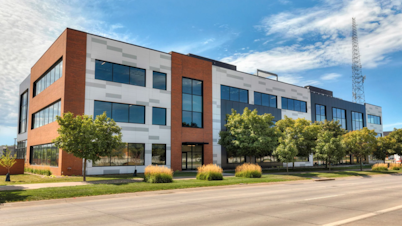
Hubbell Realty installed 75F's IoT Building Management System with goals to set a flexible foundation for future building upgrades.